
The Litigation Minefield: A Guide to the Most Common Industry Battles
Lance Luke
5/28/20262 min read
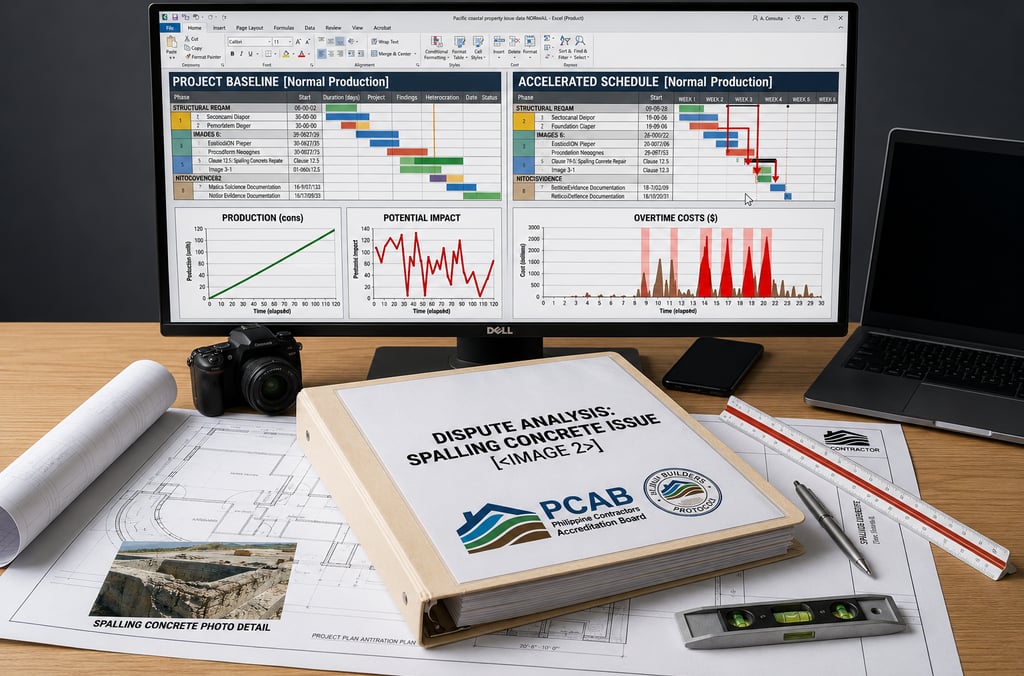
In my 45 years as a building expert and forensic investigator, I’ve seen that construction claims are practically a daily characteristic of our industry. Whether you are on a small residential remodel or a massive commercial site, the potential for a dispute is always lurking.
A claim isn't just a disagreement; it’s a formal demand for relief when the project reality hits a wall. To protect your business, you need to understand the "front-end" analysis of these claims—identifying the symptoms before they turn into a full-blown legal infection. Here is my breakdown of the most frequent battles fought on the job site today.
1. Acceleration Claims: The "Hurry Up" Factor
Acceleration happens when the contract schedule is pushed toward a faster completion than originally planned. This always triggers extra costs for additional labor, overtime, and extra resources. There are two types you need to know:
Direct Acceleration: The employer explicitly orders you to speed up.
Constructive Acceleration: This is the "hidden" one. It occurs when an employer denies your valid request for a schedule extension, forcing you to spend money to hit the original deadline.
2. The Dominant Force: Construction Delay Claims
Delay claims are the most common filings in the industry. They occur when the schedule is stalled by unanticipated events. When I’m performing a forensic audit on a delay, I focus on three things: the source (who caused it?), the direct impact (what part of the build stopped?), and the ramifications (how does this affect the final completion date?).
3. Differing Site Conditions (DSC)
This is a classic "Hawaii" issue. A DSC claim is filed when the physical site differs materially from the contractual description. For example, if your contract didn’t disclose subsurface rock formations and the contractor hits a massive boulder that stops the trenching, the contractor may be entitled to extra cost and time. It’s all about the gap between the "representation" and the "reality."
4. Design and Construction Defects
These claims hit when a project lacks quality workmanship. Whether it’s incompetently chosen hardware, poorly specified guidelines, or a total lack of quality control, a defect claim is a strike against the contractor’s professional reputation. Often, these arise when substandard materials are supplied in an effort to cut costs—a move that almost always backfires.
5. Force Majeure: The "Acts of God"
Extraordinary circumstances—natural disasters, government changes, or labor strikes—herald a Force Majeure claim. In these cases, neither party is typically entitled to financial compensation, but excusable delays and schedule extensions are almost always granted.
6. The Hardest Battle: Labor Productivity
Labor productivity claims are the most challenging to file because it is incredibly difficult to "prove" why a crew became ineffective. Since many sites don't track productivity with precision, it's hard to link the cause (mismanagement, overcrowding, or weather) to the effect (lost hours).
7. Change, Suspension, and Termination
Change Claims: These occur when code revisions, incomplete specs, or unclear drawings violate the original contract stipulations.
Suspension: A temporary stall ordered by the client.
Termination: The most severe claim, where a contractor is instructed to permanently stop all project functions.
Bottom Line: Managing construction claims requires a highly-skilled approach to contract assessment. By understanding these categories and maintaining a clear record of project impacts, you can provide a comprehensive defense for your work. Don't wait for the dispute to escalate; analyze the claim early and often.